Humus helps plants grow by doing three things at once: it holds nutrients in the soil so they don't wash away, it improves soil structure so roots get both water and oxygen, and it feeds the microbial community that converts organic inputs into forms plants can actually use. It's not a fertilizer you pour on and see results in a week. It's more like upgrading the soil's operating system so everything else works better.
How Does Humus Help Plants Grow? Benefits and How to Add It

Marcus Holloway
28 May 2026
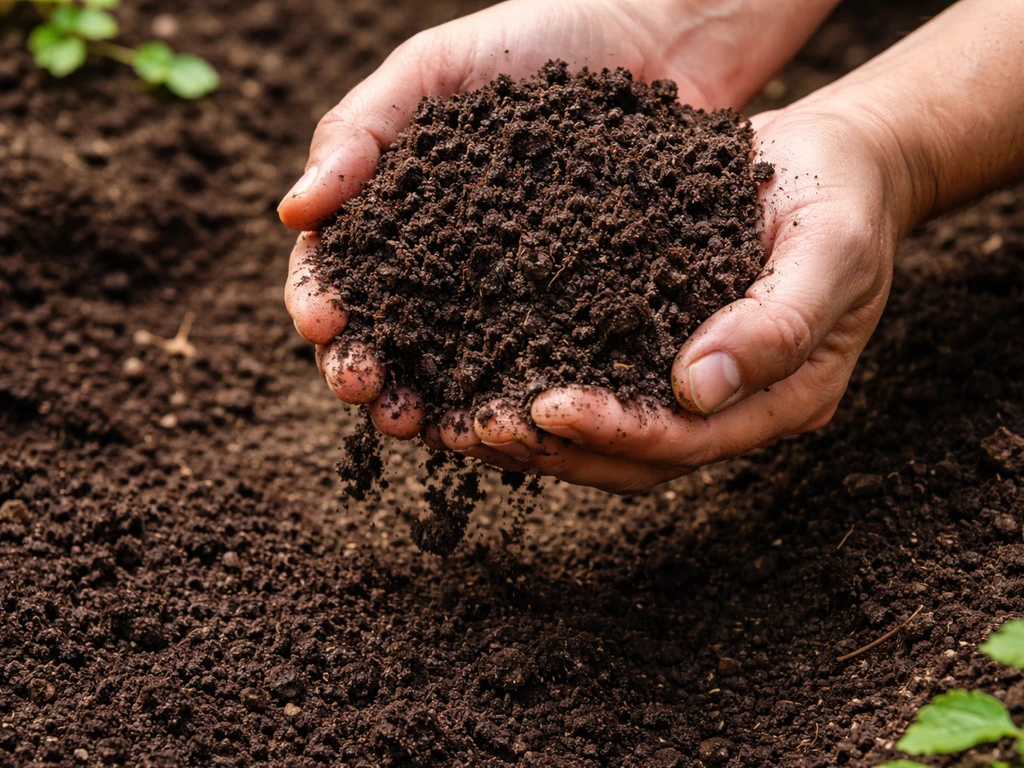
What humus actually is (and why the bag at the garden center probably isn't it)
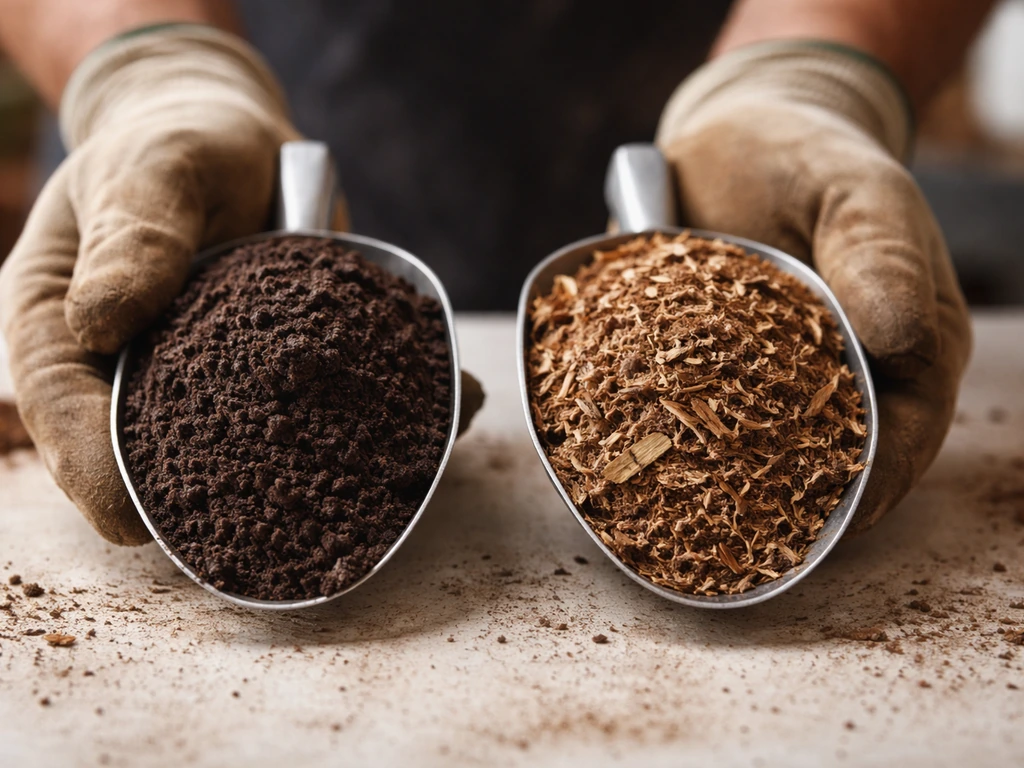
Humus is the stable, dark, highly decomposed fraction of soil organic matter that remains after the faster-decomposing stuff has largely broken down. Colorado State University Extension describes it as the stabilized organic matter pool that decomposes very slowly, roughly 3% per year. That slowness is the whole point. It's what makes humus's benefits durable rather than fleeting.
What humus is not: compost, manure, mulch, or freshly added organic material. Compost is organic matter in the process of stabilizing. Manure is raw or partially decomposed biological waste. Mulch sits on the surface and decomposes slowly from the top down. None of these are humus yet, though over time they can contribute to the humus pool in your soil. The University of Minnesota Extension frames it plainly: "humus" is essentially an old term for stable organic matter, distinct from the particulate organic matter that's still actively breaking down.
This matters practically because many bags sold as "humus" at garden stores are actually compost or blended organic material. CSU Extension specifically flags this. That doesn't mean those products are useless, but they behave more like compost than like true stabilized humus. Your expectations should match what you're actually applying.
How humus fixes the way soil holds water and air
One of humus's most visible effects is on soil structure, specifically on aggregation. Aggregates are those crumbly clumps of soil particles that good garden soil is made of. Humus acts as a kind of biological glue that binds mineral particles into these stable clusters, creating a network of pores between and within them. Those pores are where water drains, air moves, and roots travel.
USDA ARS research connects organic matter directly to changes in aggregation, porosity, and surface-connected pores, which are the physical pathways for both infiltration and root oxygenation. In practical terms: a soil with a healthy humus fraction drains excess water faster after rain but also retains moisture longer during dry periods because the pore structure holds water at the right tension for roots to access it. Tasmania's soil guidance links this to measurable changes in bulk density and infiltration rate.
Compacted soils with low organic matter collapse those pores. Roots struggle to push through, oxygen gets depleted, and water either puddles on top or drains straight through depending on the dominant soil type. Humus doesn't fix compaction overnight, but building it consistently is one of the most reliable long-term solutions. Because the stable humus pool decomposes so slowly, the structural improvements it creates are also more durable than those from a single compost application.
How humus feeds your plants (without acting like a fertilizer)
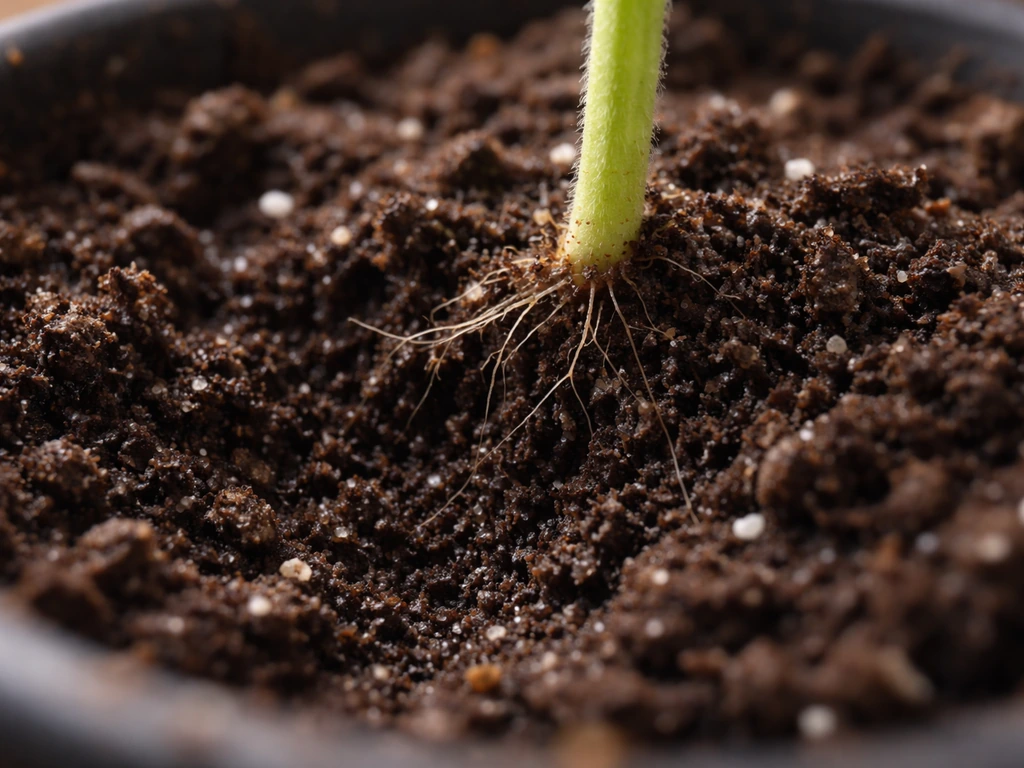
Humus holds nutrients. Ammonia is one of the nitrogen forms microbes can convert, and a humus-rich soil helps those processes by improving nutrient holding and availability for plant growth Humus holds nutrients. This comes down to cation exchange capacity, or CEC. USDA NRCS explains that cation exchange capacity is related to the charge-bearing soil mineral and organic colloidal particles blank" rel="noopener noreferrer">cation exchange capacity (CEC). CEC is essentially a measure of how many nutrient ions a soil can grab onto and make available to plant roots rather than letting them leach out with irrigation or rain. Humus has an exceptionally high CEC, around 100 to 300 meq/100g according to Tasmanian soil research, which is dramatically higher than most mineral particles. University of Florida IFAS confirms that blank" rel="noopener noreferrer">soil organic matter and clay minerals are the two main contributors to CEC, and in sandy soils where clay is absent, humus does almost all the heavy lifting. How does fertile soil help plants grow? Part of the answer is that humus improves soil structure and helps keep nutrients and water available for roots.
What this means for your plants: calcium, magnesium, potassium, and other cations stick to humus particles instead of washing through the root zone. Roots can pull them off as needed. Soils low in humus lose nutrients faster, which is why sandy, low-organic soils often require more frequent fertilization. This is also why fertilizing a soil with no organic matter foundation is often a short-term fix rather than a lasting solution. You keep pouring nutrients in, and they keep draining out.
Beyond holding nutrients, humus releases them slowly as it mineralizes. OSU Extension describes this as a slow, steady trickle rather than a spike. That steadiness matters because most plants grow more consistently with a moderate, continuous nutrient supply than with feast-and-famine cycles from fast-release synthetic fertilizers. This is similar in principle to how urea and other nitrogen sources work differently depending on whether they have organic matter to buffer their release.
How humus supports the biology your roots depend on
Soil isn't an inert growing medium. It's a living system, and humus is a big part of what keeps it that way. Auxin is another key driver of plant growth because it helps regulate cell elongation and root development as plants respond to their environment humus is a big part of what keeps it that way. Humus provides food and habitat for bacteria, fungi, and larger soil organisms like earthworms. Those organisms, in turn, break down fresh organic inputs into simpler compounds, produce substances that further stabilize aggregates, cycle nutrients from unavailable forms into plant-available ones, and in the case of mycorrhizal fungi, directly extend the reach of plant root systems.
Research published in PMC connects earthworm activity to enhanced soil carbon storage and microbial stabilization, showing that humus-rich biological inputs strengthen aggregate structure. A separate field study found that earthworm cast application increased organic carbon across multiple aggregate-size fractions. In other words, the relationship runs in both directions: humus feeds soil biology, and soil biology helps build more humus. This is also why worm castings are so valued by gardeners, they're essentially a biologically active, humus-rich amendment.
For root health specifically, a biologically active soil means roots encounter fewer pathogens (beneficial microbes compete with harmful ones), better aeration (aggregates maintained by biology create those pore networks), and faster access to nutrients (microbes convert organic nitrogen and phosphorus into plant-available ions). Plants in humus-rich soil tend to develop more extensive root systems, which translates to more resilience during drought, heat stress, or transplant shock.
How to actually add humus to your garden
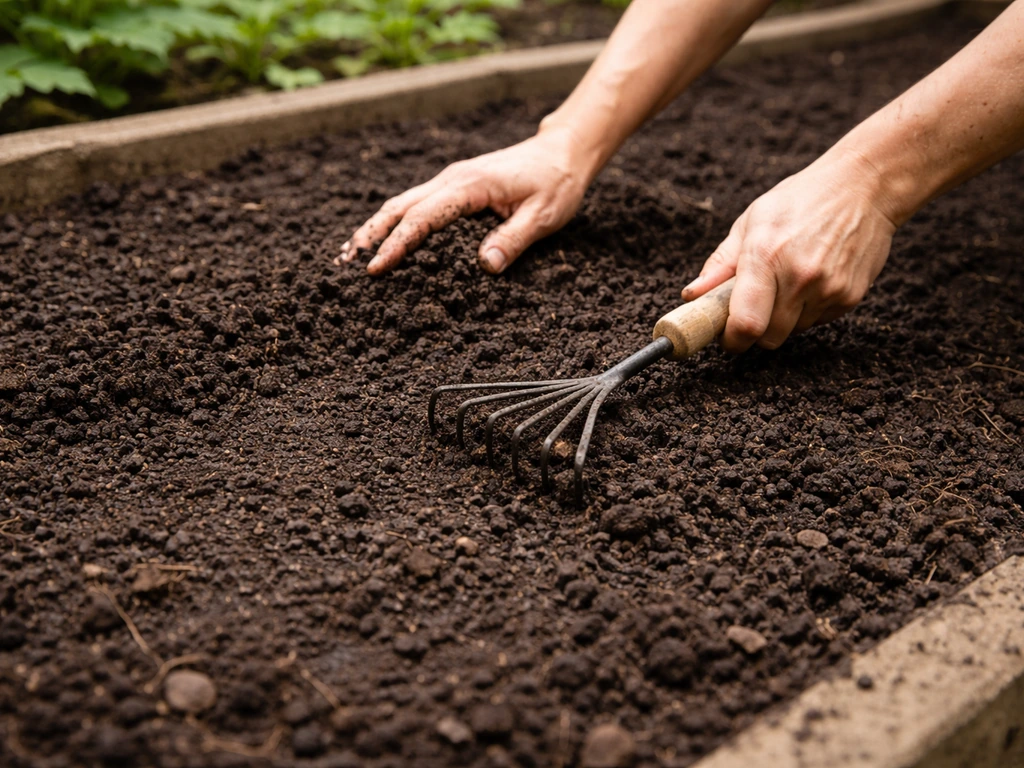
Here's the honest reality: you can't buy a bag of "true humus" and dump it in. You build the humus pool over time by consistently adding organic inputs that stabilize in your soil. The most effective approach for home gardeners is to apply well-aged compost or leaf mold regularly, let soil biology do the conversion, and avoid practices that destroy existing organic matter.
For in-ground beds
- Apply 1/4 to 1 inch of finished compost per year to existing vegetable beds. OSU Extension gives this as the practical annual rate for maintaining and building organic matter without overloading soil with salts or nutrients.
- When preparing or turning a new bed, incorporate compost into the top 8 to 12 inches of soil. This puts organic matter where most feeder roots are active.
- Topdress established beds and perennial plantings by spreading compost on the surface rather than digging it in. Soil organisms will pull it down over time, and you avoid disrupting root systems or soil structure.
- Use leaf mold (decomposed leaves) as a lower-nutrient, high-structure amendment if you want to specifically target physical soil improvement rather than a nutrient boost. Aged leaf mold is one of the closest things to a humus-like amendment a gardener can make at home.
- Avoid tilling when soil is wet. OSU Extension specifically warns that wet tilling damages aggregate structure and accelerates organic matter loss, undoing exactly what you're trying to build.
For containers and potting mixes
Container soils lose organic matter faster than in-ground beds because they're isolated from soil biology and are watered more frequently. Mix in 20 to 30% finished compost by volume when making or refreshing a potting mix. Replace or refresh potting mix every one to two seasons for long-term plantings. Top-dressing containers with a thin layer of compost each season adds some organic matter and feeds container soil biology, even if the conversion to stable humus is slower than in ground soil.
Common mistakes to avoid
- Using immature or 'hot' compost: fresh, incompletely decomposed compost can tie up nitrogen as it finishes breaking down, temporarily starving plants. It also introduces weed seeds. Make sure compost is dark, crumbly, and earthy-smelling before applying.
- Overapplying compost: more is not always better. Excessive organic matter can raise phosphorus to levels that actually inhibit plant uptake of other nutrients and can alter soil pH. Stick to the recommended 1/4 to 1 inch per year unless a soil test shows you need more.
- Expecting immediate results: humus builds over seasons, not days. If you apply compost in spring, the structural and nutrient-holding benefits ramp up gradually as biology processes the inputs and the stable fraction grows.
- Confusing compost tea with humus amendment: adding compost tea to soil introduces microbes and soluble nutrients but does not add stable organic matter. It's not a substitute for physically amending soil with finished compost or leaf mold.
How to tell if it's working (and what to check when it isn't)
Humus improvement shows up gradually, so you're looking for trends over months and seasons rather than changes week to week. Here are the signs that your soil's organic matter is building in the right direction.
| What you observe | What it likely means |
|---|---|
| Soil surface stays moist longer after watering | Improved water retention from better aggregation and pore structure |
| Water no longer pools or runs off on the surface | Infiltration rate improving as aggregate stability increases |
| Soil crumbles easily when dry rather than forming hard clods | Aggregate structure strengthening from organic matter binding |
| More earthworms visible when digging | Soil biology responding to increased organic food sources |
| Plants grow more evenly without mid-season nutrient crashes | Higher CEC retaining nutrients between feedings |
| Fewer watering cycles needed for same plant health | Better moisture retention reducing evaporation loss |
When humus isn't the whole answer
If you've been building organic matter consistently and plants are still struggling, humus is probably not the limiting factor. Run through this checklist before doubling down on more compost.
- Light: humus does nothing for a plant in insufficient light. If growth is slow and leggy, check hours of direct sun before blaming soil.
- Drainage: if soil is waterlogged, even perfect organic matter won't save roots. Check whether your bed or container drains freely. Raised beds and drainage amendments may be needed.
- pH: organic matter helps, but if soil pH is far outside a plant's preferred range (usually 6.0 to 7.0 for most vegetables), nutrients won't be available regardless of how much humus is present. A $15 soil test from your county extension service tells you this in minutes.
- Specific nutrient deficiency: humus improves nutrient retention and slow release, but it doesn't supply large amounts of any single nutrient. If you see classic deficiency symptoms like yellowing between leaf veins (magnesium or iron) or purple undersides of leaves (phosphorus), a targeted amendment is needed alongside your organic matter building.
- Watering inconsistency: humus improves moisture behavior, but it can't compensate for chronic overwatering or underwatering. Make sure your watering practice is matching plant needs.
The bottom line on humus is that it's a genuine, science-backed soil improver with measurable effects on structure, nutrient retention, and biology. So, when you build humus in your soil, you can better understand how protein helps plants grow by improving the nutrient and biological foundation they rely on how does protein help plants grow. It's also not magic, and it's not fast. The gardeners who get the most from it are the ones who apply compost consistently every season, protect their soil from unnecessary disturbance, and give the system time to compound. Build it year over year and your soil will eventually reach a point where it's doing a lot of the work for you.
FAQ
How long does it take before humus-rich soil improves plant growth?
Expect gradual changes over months, not days. Structure and nutrient cycling build with time as biology stabilizes organic inputs, so the clearest results often show up across a full growing season, especially in beds with compacted or sandy soil.
If I add compost, am I also increasing humus, or is that different?
Compost can contribute to the humus pool later, but it is not the same thing when you apply it. Humus is the stabilized fraction that forms after continued microbial processing, so compost usually helps right away with biology and then supports humus buildup over time.
Do I need to stop using synthetic fertilizer if I’m building humus?
Not necessarily. Humus improves nutrient holding and moderates release, but it does not guarantee enough nutrients for fast-growing crops. Many gardeners reduce fertilizer rates gradually and watch plant color, growth rate, and leaf tissue, then adjust based on need.
What if my soil is clay-heavy, does humus still help the same way?
Yes, but the emphasis can shift. In clay soils, humus mainly improves aggregation and pore continuity, which can reduce waterlogging and improve root oxygen. You may notice better drainage and less surface crusting as humus builds.
How much compost is enough to build humus without overdoing it?
A common practical target is consistent, moderate additions rather than heavy single doses. Over-application can create temporary nutrient imbalances or excessive growth of foliage at the expense of root establishment, so spread the input across seasons.
Can humus help with drought tolerance, or is it only about water retention?
Both. The pore structure created by stable aggregates helps roots access moisture at the right tension, and healthier microbial activity can support more robust root systems. In drought, the payoff is often deeper, more resilient rooting rather than just soil staying wet longer.
Will humus fix root diseases or prevent pathogens automatically?
It can reduce disease pressure, but it is not a sterilizer. A biologically active soil supports competition from beneficial microbes, and improved root aeration helps too, yet severe infestations or underlying issues (like poor drainage) still need direct management.
What’s the biggest mistake gardeners make when trying to increase humus?
Treating products labeled “humus” as guaranteed stable humus. Many garden-store blends are compost-like or partially stabilized, so the more reliable approach is consistent use of well-aged organic inputs and minimizing soil disturbance so existing organic matter can persist.
Should I till to incorporate compost and build humus faster?
Frequent tilling can slow progress by disrupting soil aggregates and accelerating decomposition of existing organic matter. For many gardens, lighter incorporation or top-dressing with compost plus minimal disturbance protects the structure you are trying to build.
How does humus help container plants specifically, given that containers lose organic matter faster?
Container media gets leached and biologically “resets” more often, so humus building is slower and needs repetition. Mixing 20 to 30% finished compost into potting mix and refreshing containers on a schedule helps maintain microbial activity and nutrient buffering.
How can I tell if humus is improving my soil or if something else is limiting growth?
Look for trend-based indicators like improved drainage, fewer crusting problems, steadier plant color without big swings after watering, and more vigorous root development. If plants stay stunted despite these improvements, check other constraints first, such as pH, compaction, light, or nutrient deficiencies.
Next Articles
How Does Plowing Help Plants Grow Better? Benefits and Tips
Learn how plowing improves aeration, drainage and root growth, plus downsides, when to till, and a next-step checklist f
How Does Ammonia Help Plants Grow? Nitrogen, Safety, and Use
Explains how ammonia provides plant-usable nitrogen via conversion to ammonium and nitrate, plus safe use and risks.
How Do Microorganisms Help Plants Grow: Practical Guide
Learn how microbes in the rhizosphere fix nitrogen, boost phosphorus, aid roots, suppress disease, and how to grow them.