Fertile soil helps plants grow by doing three things at once: feeding roots with the right nutrients in forms plants can actually absorb, holding enough air and water so roots can expand without drowning or drying out, and hosting billions of microorganisms that keep breaking down organic matter into fresh plant food. It's not magic or "rich dirt" in some vague sense. It's chemistry, structure, and biology working together, and once you understand which part of that system is failing in your garden, fixing it gets a lot more straightforward.
How Fertile Soil Helps Plants Grow: Key Mechanisms

Marcus Holloway
6 Jun 2026
What "fertile soil" really means
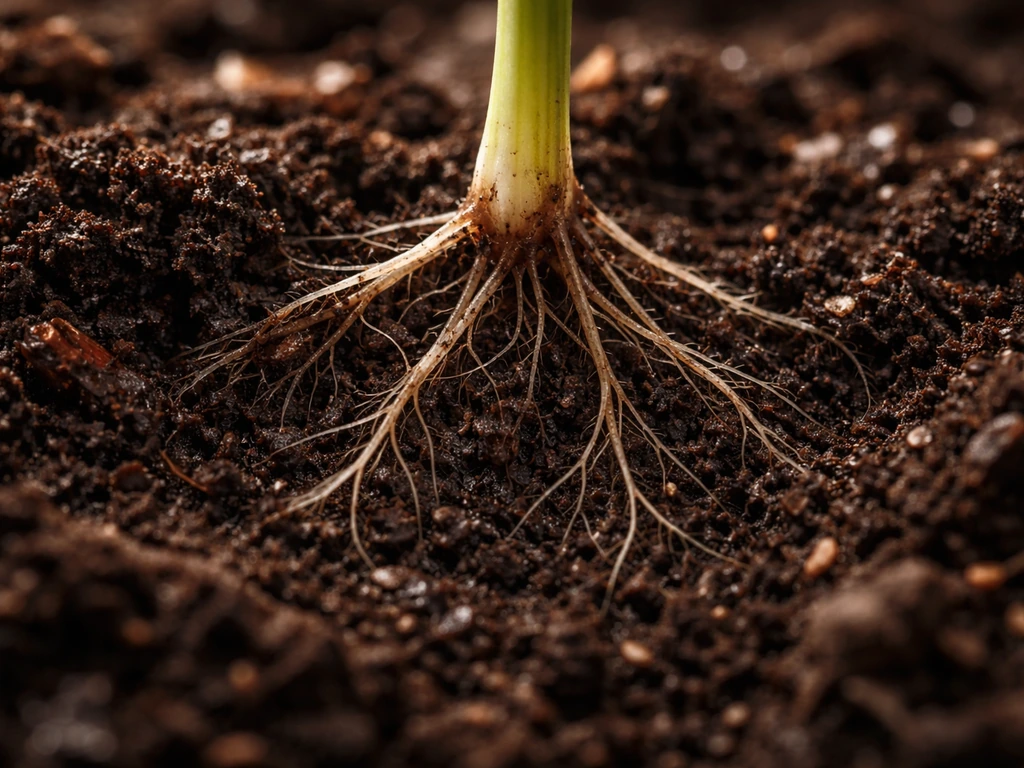
Fertile soil isn't just dark-colored soil or soil that smells good, though both of those can be positive signs. In real horticulture, fertility refers to a soil's capacity to supply plants with the nutrients they need, in the right chemical forms, at the right rate. Penn State Extension sums it up well by describing quality soil as fertile, structurally sound, and biologically active. All three of those attributes have to be present for the full picture of fertility to hold.
A soil can be packed with nitrogen and still grow weak plants if the structure is so compacted that roots can't penetrate it. A soil can have perfect tilth but grow nothing useful if the pH is so far off that nutrients get locked up chemically. Fertility is a system, not a single ingredient.
One of the biggest misconceptions I run into is that people conflate "fertile" with "heavily amended" or "full of fertilizer." You can dump bags of synthetic fertilizer on pure sand and get a temporary nutrient spike, but that's not the same thing as fertility. True fertility involves the soil's ability to hold, cycle, and release nutrients over time, which is a function of organic matter content, clay content, microbial populations, and pH, not just what you applied last month.
Nutrients: how fertility feeds plant growth
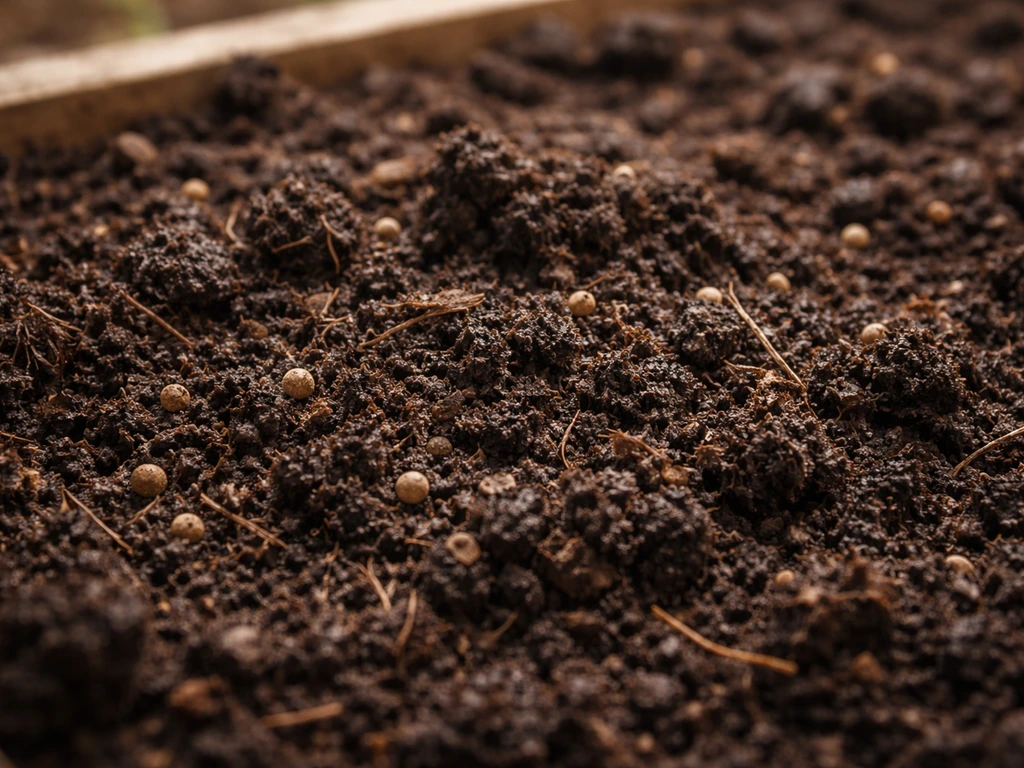
Plants need 17 essential nutrients. Nitrogen, phosphorus, and potassium get the most attention because they're needed in the largest quantities and are most commonly deficient, but calcium, magnesium, sulfur, and a range of micronutrients matter too. Penn State Extension notes that in many maintained soils, nitrogen, phosphorus, potassium, and magnesium are the elements most frequently found deficient. The point isn't to memorize the list. It's to understand that fertile soil supplies a broad range of these nutrients in plant-available forms.
Here's the mechanism that trips a lot of gardeners up: most nutrients in soil aren't dissolved and floating freely in water. They're held on the surfaces of clay particles and organic matter by weak electrical charges. Montana State University Extension calls these "exchangeable nutrients," held loosely enough that plant roots can pull them off and take them in. The technical term is cation exchange capacity, or CEC.
Soils with higher CEC, usually meaning more clay or more organic matter, hold more nutrients and release them more gradually, which is why they're more reliably fertile than sandy soils. On a sandy soil, nutrients leach away fast because there's almost nothing to hold them. Adding organic matter to sandy soil is one of the most effective ways to raise its CEC and improve its ability to hold nutrients.
pH plays a central role here that most gardeners underestimate. Even if all the right nutrients are physically present in the soil, the wrong pH can lock them up in chemical forms that plant roots simply can't absorb. Most vegetables and ornamentals do best in the 6.0 to 7.0 range. Outside that window, specific nutrients become unavailable regardless of how much you've added. This is why adding more fertilizer to a pH-imbalanced soil rarely solves the problem. OSU Extension specifically identifies pH and available nutrient levels as key chemical indicators of soil health, alongside CEC. Fix the pH first, then worry about nutrient additions.
Soil structure: roots get air, water, and room to expand
Nutrient chemistry matters a lot, but roots have to physically be able to reach those nutrients. Plowing also helps by loosening and mixing soil, which can improve root access and the conditions nutrients and microbes need to support healthier plant growth how plowing helps plants grow better.
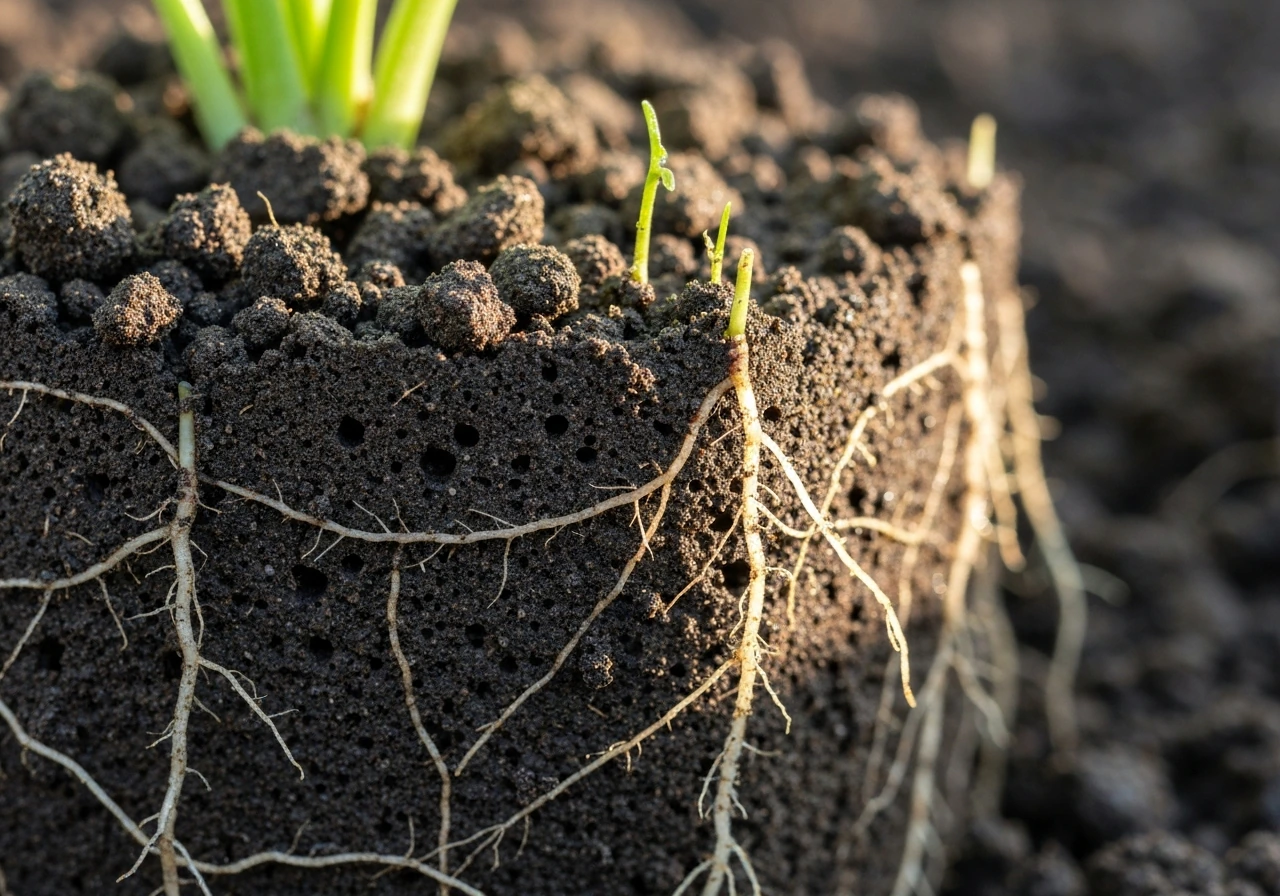
Soil structure, meaning how soil particles clump together into aggregates with pore spaces between them, determines whether roots can penetrate, whether water drains at a reasonable rate, and whether enough oxygen reaches root zones. Plants need oxygen at the root level. Most people only think about oxygen for leaves, but roots need it for cellular respiration too. Compacted soil squeezes out those pore spaces, and waterlogged soil fills them.
Either way, roots suffocate.
A fertile soil has a mix of macro-pores (larger spaces that allow water to drain and air to enter) and micro-pores (smaller capillary spaces that hold water for roots to draw on between rains). Organic matter is the main driver of good aggregate structure. It acts like a glue that helps soil particles bind into stable clumps rather than packing tight. Earthworms and other soil life help enormously here too, which ties directly into the biology discussion below. The practical takeaway: if your soil bakes into a hard crust after rain or feels like concrete when dry, it doesn't matter what's in it chemically. Fix the structure first.
Soil biology: microbes that unlock nutrients
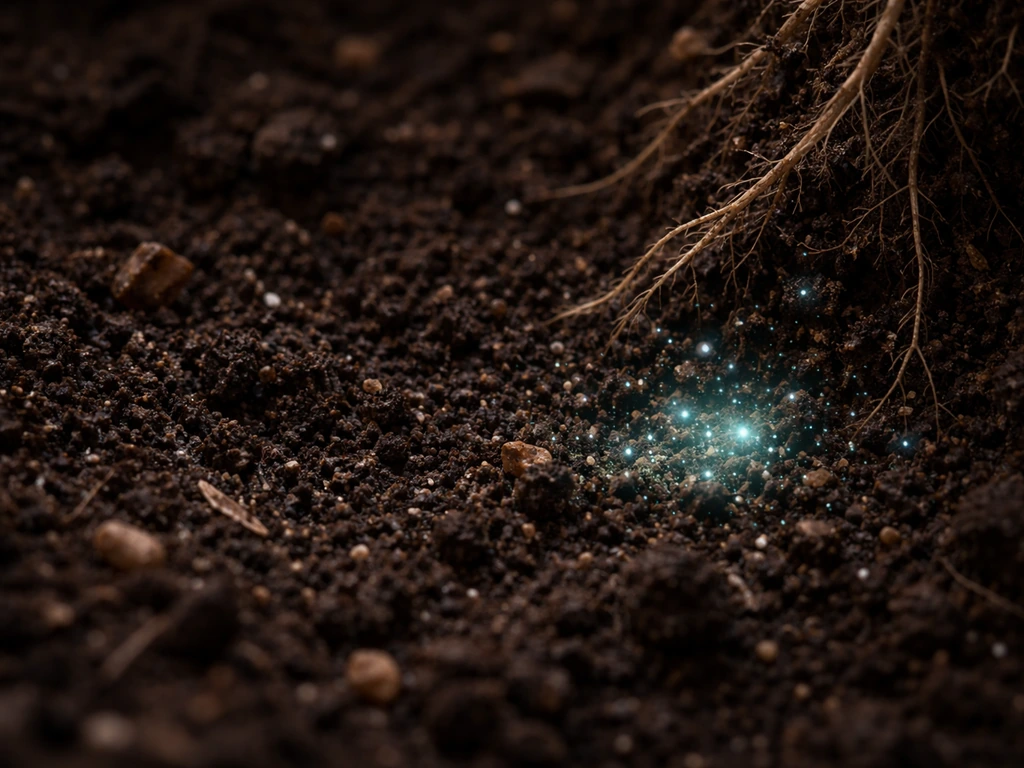
This is the part of soil fertility that gardeners most often overlook, and it's genuinely fascinating once you dig into it. Fertile soil is alive. A single teaspoon of healthy garden soil can contain more microorganisms than there are people on Earth. These bacteria, fungi, protozoa, and other organisms are constantly breaking down organic matter, releasing nutrients in plant-available forms, and forming relationships with plant roots that extend a plant's effective reach for water and minerals.
Penn State Extension emphasizes nutrient cycling and biological pest control as core soil health functions, and both of those are driven by microbial activity. Mycorrhizal fungi, for example, colonize plant roots and extend thread-like hyphae far into the surrounding soil, pulling in phosphorus and other nutrients the root itself couldn't reach. Nitrogen-fixing bacteria (in and around legume roots especially) convert atmospheric nitrogen into ammonium that plants can use.
Nitrogen-fixing bacteria convert atmospheric nitrogen into ammonium, which is one way ammonia can help plants grow by providing usable nitrogen. Decomposer bacteria and fungi break down dead plant material and animal matter, including things like worm castings and compost, into mineral forms that become plant food. Without this biological engine running, you'd have to supply every nutrient artificially. With it, <a data-article-id="3CBFB4E0-2B6B-4B21-9639-07E4B561E238">the soil feeds itself and your plants.
Soil biology is also why over-tilling and over-applying synthetic fertilizers can backfire. Repeated deep tillage physically destroys fungal networks. High-salt fertilizers can suppress microbial populations. OSU Extension frames biological activity and organic matter cycling together as indicators of soil health, and that framing is right: the more organic matter you have cycling through the system, the more biological activity you support, and the more fertility the soil generates on its own over time. Humus, the stable end product of organic matter decomposition, is particularly important for long-term biological and chemical fertility.
Water and nutrient holding capacity: why moisture stability matters
Fertility isn't just about what's in the soil when it's dry. It's about what happens when water moves through it. Water is the transport medium for nutrients. Dissolved nutrients travel from soil into root cells along with water. If soil drains too fast (as with pure sand), nutrients leach out and roots dry out between waterings. If it drains too slowly (as with heavy clay), roots sit in anaerobic conditions and can rot. Fertile soil holds water long enough for roots to absorb it, then drains the excess.
University of Nevada, Reno Extension explains that sandy soils depend heavily on organic matter to increase their CEC and water-holding capacity. Organic matter particles act like tiny sponges. A soil with 5% organic matter holds significantly more plant-available water than the same soil with 1% organic matter. That moisture stability also matters for soil biology. Microbial populations crash under extremes of drought or saturation. A soil that stays consistently moist (not wet, not bone dry) keeps its biological engine running at full capacity, which in turn keeps nutrients cycling and available. Compost additions address all three of these variables at once: they improve structure, raise CEC, and feed soil microbes.
How to tell if your soil is fertile
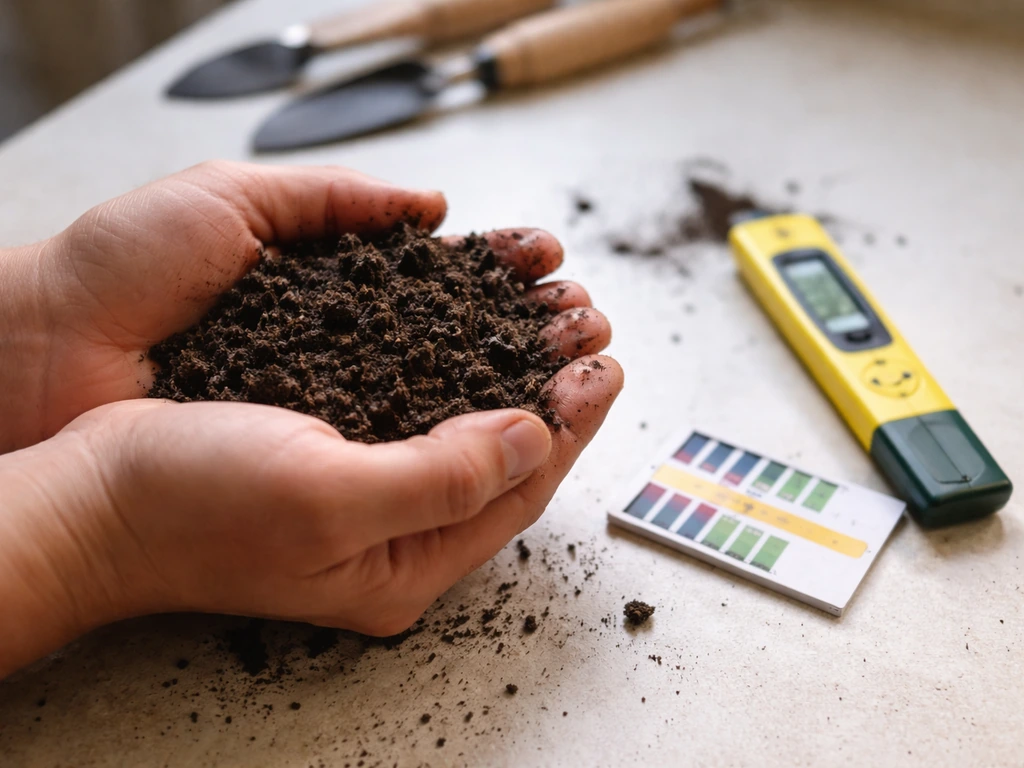
You don't need a laboratory to get a solid read on your soil's fertility. There are quick physical observations and simple tests that tell you a lot. Soil test interpretation is designed to estimate nutrients that are expected to become plant-available for growth, including nitrogen and phosphorus soil tests are used to measure nutrients expected to become plant-available.
Physical signs to look for
- Dark color: not definitive, but darker soils typically contain more organic matter
- Earthy smell: a rich, pleasant smell indicates active microbial life (caused by a compound called geosmin)
- Crumbly texture: soil that breaks apart into small aggregates rather than clodding or packing is structurally sound
- Earthworms: dig 12 inches down and count what you find. Fewer than 10 earthworms in a cubic foot of soil is a sign of low biological activity
- Plant performance: consistent yellowing, stunted growth, or poor fruit set often indicate nutrient deficiency or pH problems
- Water behavior: water should soak in within a few seconds of application, not puddle or run off immediately
Simple tests worth doing
- pH test: an inexpensive pH meter or test strip gives you an immediate reading. Most garden plants want 6.0 to 7.0. This is the single most useful test you can do at home
- Jar settling test: fill a jar with soil and water, shake it, and let it settle for 24 hours. The layers (sand at bottom, silt above, clay above that, organic matter floating) tell you your soil's basic texture
- Squeeze test: moist soil that holds its shape when squeezed but crumbles when poked has a good clay-sand balance. Soil that stays in a hard ball has too much clay; soil that won't hold shape at all is too sandy
- Mail-in or university lab soil test: OSU Extension notes these tests measure nitrogen, phosphorus, and other nutrients expected to become plant-available. A full panel from your state's land-grant university extension typically costs $15 to $30 and gives you specific amendment recommendations for your actual soil
How to improve fertility today
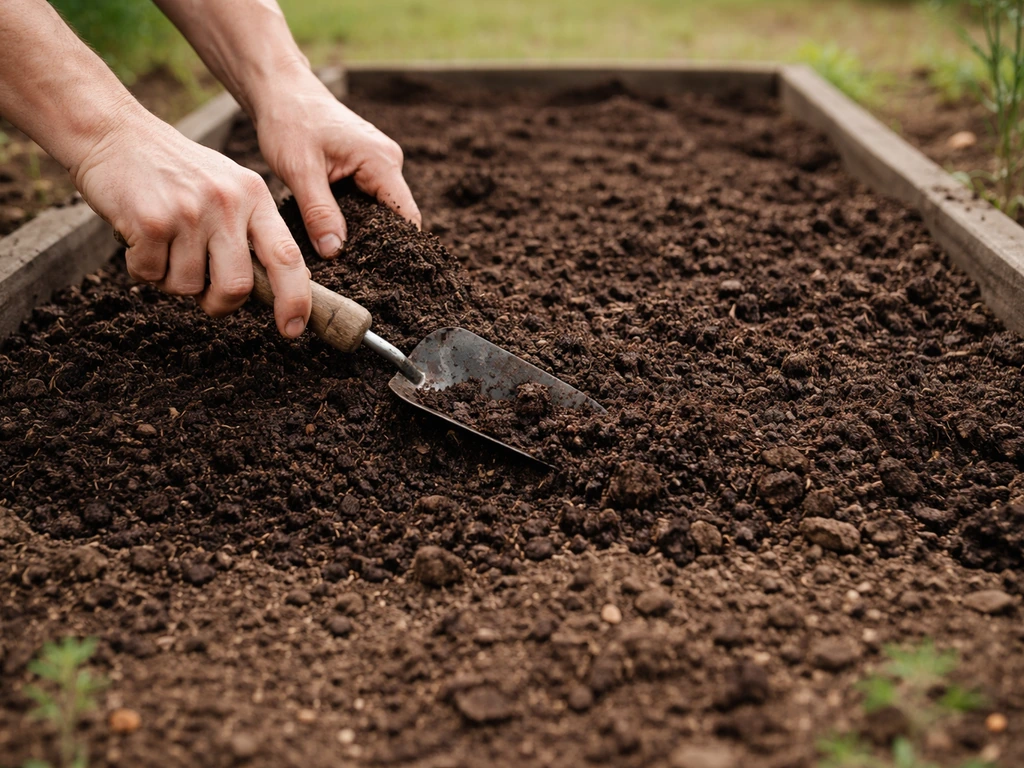
Once you know what you're working with, the fixes are usually straightforward. The most universally effective step is adding compost. A 2 to 3 inch layer of finished compost worked into the top 6 to 8 inches of soil improves structure, raises CEC, adds a slow-release nutrient supply, and feeds soil biology all at once. It genuinely does almost everything. If you do nothing else, do this.
Beyond compost, match your amendments to what your soil test actually showed rather than guessing. Throwing a generic balanced fertilizer at everything is a common but inefficient approach. If your pH is low (acidic), adding lime raises it. If it's too high (alkaline), elemental sulfur or acidifying fertilizers bring it down. Urea is one common nitrogen fertilizer source, and when it breaks down into plant-available forms it can help support healthy leafy growth.
Elemental sulfur can help plants grow when it’s used to lower soil pH and make nutrients more available. For nitrogen specifically, organic sources like worm castings or composted manure release slowly and feed soil biology while they're at it. Faster-acting nitrogen sources (like urea or ammonium-based fertilizers) are useful when plants are actively deficient and need a quick correction, but they shouldn't be the only tool you're using.
Practical amendment guide
| Problem | Amendment | Notes |
|---|---|---|
| Low organic matter / poor structure | Compost (2-3 inch layer) | Works for all soil types; improves structure, CEC, and biology |
| Low pH (too acidic) | Garden lime (calcitic or dolomitic) | Dolomitic also adds magnesium; apply based on soil test rate |
| High pH (too alkaline) | Elemental sulfur or acidifying fertilizer | Sulfur works slowly; retest after 2-3 months |
| Nitrogen deficiency | Compost, worm castings, or urea for fast correction | Organic sources feed long-term; synthetic nitrogen is a short-term fix |
| Phosphorus deficiency | Bone meal or rock phosphate | Phosphorus moves slowly in soil; apply near root zones |
| Low CEC (sandy soil) | Compost or aged manure (large amounts) | Rebuilding CEC in sand takes consistent additions over seasons |
| Poor biological activity | Compost, reduce tillage, mulch surface | Avoid high-salt fertilizers and deep tillage if possible |
Matching your soil work to what you're growing
The right fertility target depends on what you're planting. Vegetables are heavy feeders, especially fruiting crops like tomatoes, squash, and corn. They need consistently available nitrogen and phosphorus and benefit from soil testing and targeted fertilization every season. Ornamental beds and perennials are generally less demanding and often thrive on a single annual compost top-dress with occasional pH correction. Container plants are a different situation entirely: potting mixes have no CEC to speak of and leach nutrients with every watering, so slow-release fertilizers and regular liquid feeding are essential in ways they aren't in-ground.
If you're gardening in-ground and building soil over years, the goal is to gradually increase organic matter toward the 4 to 5 percent range and stabilize pH in your target zone. That takes time, but each season's compost addition moves you in the right direction. If you're starting with particularly bad soil (heavy clay, pure sand, or soil that's been compacted or chemically depleted), consider raised beds with imported topsoil and compost blended in to get results immediately while you improve the native soil beneath.
The bottom line is that fertile soil isn't mysterious. It's chemistry (nutrients at the right pH, held by organic matter and clay), structure (pore spaces for roots, air, and water), and biology (living organisms that keep the whole system cycling). Test your soil, fix the pH first if it's off, add compost as a baseline, then dial in targeted amendments for whatever deficiencies your test reveals. Auxin is one of the key plant hormones that helps coordinate growth by influencing cell expansion and root development. That sequence works in any garden, for any plant, and it's based on what the science actually shows, not on gardening folklore.
FAQ
How do I know if my soil is fertile or just “looks healthy” (dark and crumbly)?
Use a simple squeeze test and a pH/soil test. If the soil forms aggregates that break apart easily and not a hard shell after rain, structure is likely good, but fertility also depends on nutrient availability and pH. If pH is off, nutrient readings on paper may not translate into plant-available nutrients in practice.
Why do my plants look deficient even though I added compost or fertilizer recently?
Timing and placement matter. Compost improves fertility gradually, but roots can miss nutrients if amendments sit too deep or if the top 6 to 8 inches dry out between waterings. Also check pH, because the same nutrient amount can become unavailable if pH locks it up, leading to “deficiency symptoms” despite inputs.
What should I test first, pH or nutrients?
Check pH first. If pH is out of the effective range for your crops, fixing nutrients alone often wastes money because uptake is chemically constrained. After pH is corrected, then interpret nutrient results like nitrogen, phosphorus, potassium, and magnesium so you know what the soil can actually supply in plant-available forms.
Does adding lots of compost replace soil testing and targeted fertilization?
Compost helps a lot, but it does not eliminate the need for testing. Compost rates can raise pH, alter nutrient ratios, and vary widely by feedstock, so you can still end up with an imbalance (for example, high phosphorus when you really needed potassium). A periodic soil test helps you keep fertility “in balance,” not just “higher.”
How can I tell if my main problem is soil structure (compaction/water) versus fertility (nutrients/pH)?
Watch water behavior and root performance. If water pools after irrigation or the soil stays wet for days, structure and aeration are limiting, and roots may not get oxygen. If drainage is fine but growth stalls, foliage yellows in patterns, or leaf symptoms repeat, pH or nutrient availability is more likely the bottleneck.
Can too much fertilizer reduce soil fertility, even if plants initially grow faster?
Yes. High-salt or repeatedly applied soluble fertilizers can harm soil biology (microbes and beneficial fungi) and increase nutrient imbalances, which can reduce long-term fertility. If you must correct quickly, pair soluble feeding with longer-term compost and avoid over-application so you do not disrupt the cycling system the article describes.
My soil is sandy, should I just keep adding organic matter every year?
You can, and it is one of the best strategies for sandy soil because it raises water-holding capacity and CEC, reducing leaching. Focus additions on improving the top root zone consistently, and manage irrigation so microbes do not crash from extreme drought. If possible, split compost into smaller applications rather than one heavy dose to keep conditions steadier.
What about clay soil, how does fertility help if drainage is the real issue?
In heavy clay, fertility often fails because pores get clogged and roots lose oxygen, even when nutrients exist. Improve structure first (compost incorporation, avoid unnecessary compaction, and consider raised beds if waterlogging persists). Once drainage and aeration improve, nutrients and microbial activity can work as intended.
How do container plants get “fertile soil” when their potting mix has no CEC?
In containers, nutrients are constantly flushed out with each watering, so you need a slow-release fertilizer plus a plan for periodic liquid feeding. Also use mixes designed to retain some moisture while still draining, since root oxygen is still required. Fertility becomes more about consistent feeding and watering management than building long-term soil reserves.
Why do legume plants seem to improve the soil for the next crop?
Legumes can support nitrogen availability through nitrogen-fixing bacteria associated with their roots. That benefit is strongest when legumes are grown in compatible conditions (adequate pH, not extreme fertility that suppresses fixation, and enough time for nodules to form). Residual nitrogen does not replace testing, but it can reduce how much nitrogen your next crop needs.
Does tilling always reduce fertility, or can it be beneficial?
Tilling can help root penetration and mix compost into the active zone, but heavy or frequent deep tillage disrupts soil fungal networks and can reduce biological stability. If you till, do it lightly and only when needed, then avoid repeated deep disturbance so soil structure and biology can recover and persist.
What’s a practical “starter plan” if I’m starting from bad soil like sand or compacted ground?
Prioritize the root-zone fixes: correct pH if test results show it is off, incorporate 2 to 3 inches of finished compost into the top 6 to 8 inches, and address compaction or waterlogging (sometimes raised beds are the fastest path). After that baseline, refine amendments based on test findings each season so you are adding what is missing rather than repeatedly adjusting blind.
Next Articles
How Does Protein Help Plants Grow? Nitrogen Explained
How plants use nitrogen to build amino acids and proteins for growth, with fixes for yellow leaves and nitrogen myths.
How Does Humus Help Plants Grow? Benefits and How to Add It
Humus boosts soil structure, moisture, nutrients, and microbes, improving roots and plant resilience plus how to add it.
How Does Plowing Help Plants Grow Better? Benefits and Tips
Learn how plowing improves aeration, drainage and root growth, plus downsides, when to till, and a next-step checklist f